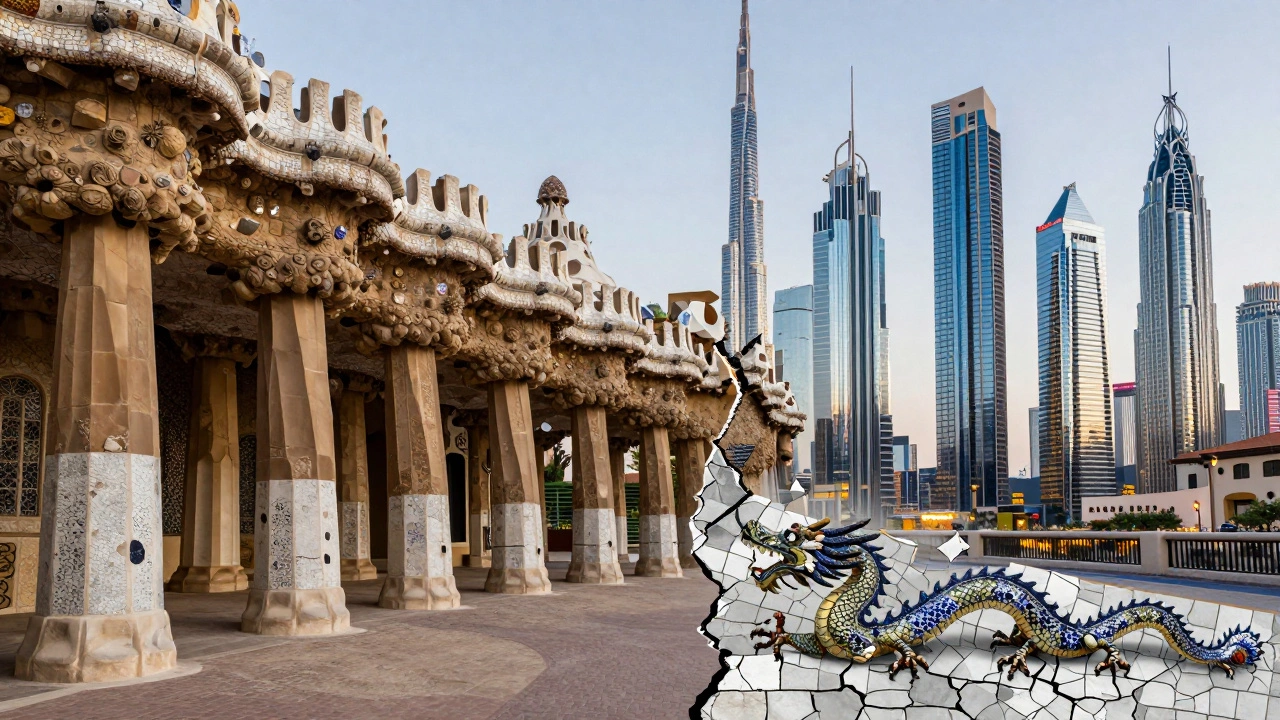
Many people believe Park Güell is in Dubai. It’s not. It’s in Barcelona, Spain - one of Antoni Gaudí’s most colorful, whimsical, and unforgettable creations. The confusion is understandable. Dubai is full of bold, surreal architecture that feels like it stepped out of a dream. But Park Güell? That’s pure Gaudí. And it’s not just a park. It’s a living sculpture, a mosaic-covered hillside where nature and art twist together in ways no other architect ever imagined.
If you’re looking for luxury companionship in Dubai, you might come across listings for dubai independent escorts. But if you’re searching for beauty that lasts centuries, you won’t find it in a private appointment. You’ll find it in the curving benches of Park Güell, painted in blue and green tiles that shimmer under the Mediterranean sun.
Why Park Güell Feels Like It Belongs in Dubai
Dubai loves spectacle. The Burj Khalifa, the Palm Jumeirah, the Dubai Frame - they’re all about scale, speed, and shock value. Park Güell is the opposite. It doesn’t shout. It whispers. And yet, it holds you longer. The park was designed between 1900 and 1914 as a luxury housing development. It failed. But Gaudí didn’t care. He turned it into a public garden, pouring his soul into every curve, every tile, every dragon-shaped fountain.
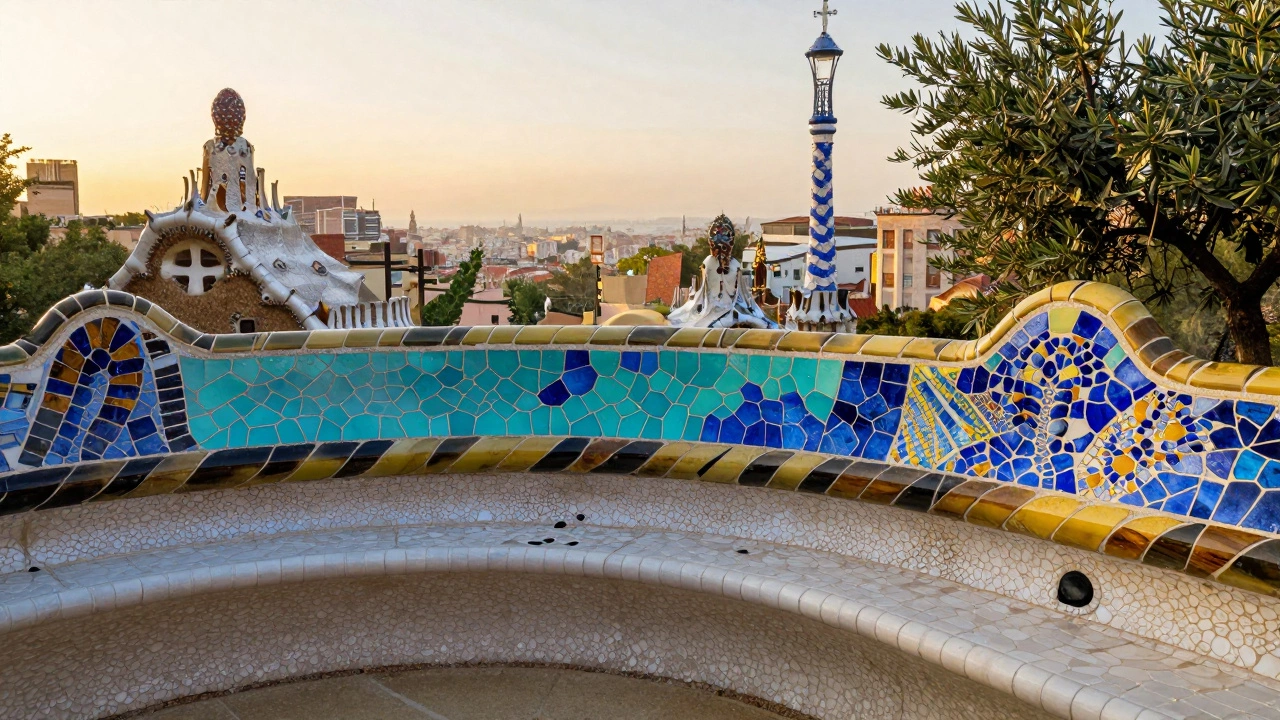
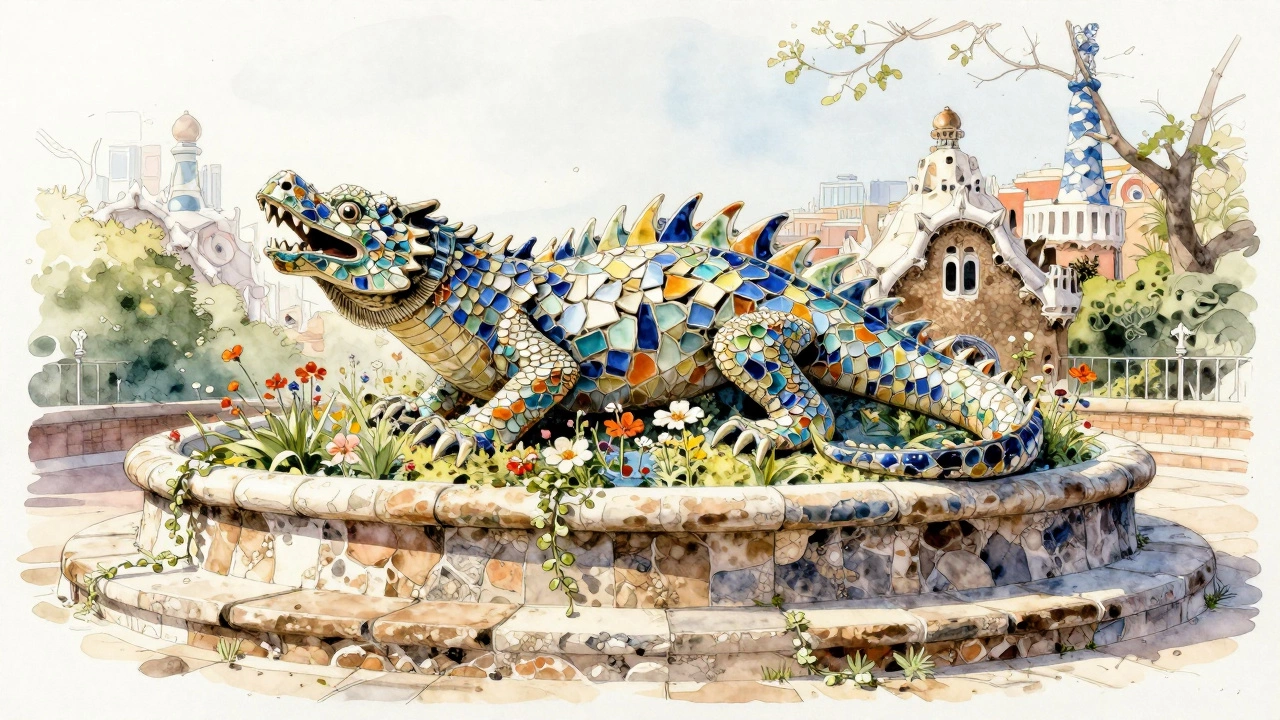
The mosaic lizard, known as El Drac, is the park’s most famous symbol. Made from broken ceramic pieces - a technique called trencadís - it glows under sunlight like something from a fairy tale. The main terrace, shaped like a giant serpent, wraps around the hill with seating that curves just right for resting, chatting, or staring at the city below. You don’t just walk through Park Güell. You move through it, like you’re inside a painting that came alive.
Gaudí’s Signature: Curves Over Corners
Most architects use straight lines. Gaudí hated them. He studied nature - the way trees branch, the spiral of seashells, the flow of wind over sand. He copied that. Park Güell’s columns look like tree trunks. The stairs mimic riverbeds. Even the railings twist like vines. This isn’t decoration. It’s engineering shaped by biology.
He didn’t use blueprints the way others did. He built models out of clay and wire, then hung weights to see how forces would pull. That’s how he designed the arches that support the terrace - they’re inverted catenaries, the strongest shape nature allows. You can’t see it from the ground, but those curves are math made beautiful. And they’ve held up for over 120 years.
How Park Güell Differs From Dubai’s Architecture
Dubai’s skyline is built for photos. Park Güell is built for presence. One is about showing off. The other is about feeling something. The Burj Al Arab looks like a sail. But Park Güell looks like it grew from the ground. It doesn’t need to be tall. It doesn’t need to be shiny. It just needs to be there - worn by time, kissed by rain, touched by thousands of hands.
And while Dubai’s buildings are made of steel, glass, and concrete, Park Güell is made of stone, tile, and earth. The tiles? Mostly recycled. Gaudí used broken plates, jars, and tiles from local factories. He didn’t care if they were perfect. He cared if they were alive. That’s why no two tiles match. That’s why it feels human.
Visiting Park Güell Today
Today, Park Güell is a UNESCO World Heritage Site. You need a timed ticket to enter the Monumental Zone - the part with the mosaic benches, the colonnaded walkways, and the Gaudí House Museum. The rest of the park is free. Locals come here to jog, picnic, or just sit and watch the sky change color over the city.
The best time to go? Early morning. The light hits the mosaics just right. The crowds haven’t arrived. You can sit on the serpent bench and feel like you’re the only person who’s ever seen it.
There’s no elevator. No escalator. Just stairs. And that’s part of the point. You earn the view. You climb. You sweat. You pause. And then - there it is. Barcelona spread out below you, the sea in the distance, and the whole park humming with color and quiet energy.
Why People Mix Up Park Güell With Dubai
Dubai has become a catch-all for anything exotic, flashy, or foreign. If it’s colorful, curved, or feels like fantasy, some assume it’s from Dubai. But that’s like calling the Eiffel Tower a theme park ride because it’s tall. Park Güell isn’t themed. It’s true. It’s real. It’s stubbornly, beautifully human.
And yet - there’s a reason the mix-up happens. Dubai, like Gaudí, plays with illusion. The Dubai Mall has an indoor waterfall. Park Güell has a dragon that spits water. One is engineered. The other is enchanted. Both make you stop. Both make you stare. But only one stays with you long after you leave.
What You’ll Miss If You Think It’s in Dubai
If you think Park Güell is in Dubai, you’ll never go to Barcelona. And if you never go to Barcelona, you’ll miss the smell of fresh bread from the corner bakery near the park. You’ll miss the old men playing chess under the trees. You’ll miss the way the light turns the tiles gold at sunset.
You’ll also miss the fact that Gaudí lived across the street in a small house that’s now a museum. He slept there. He ate there. He designed the park from his kitchen window. He didn’t fly in for a weekend. He lived here. He built it slowly. He didn’t need a budget. He needed time.
And if you’re looking for something real in a world full of staged perfection - that’s the lesson.
Other Gaudí Works You Should See
Park Güell isn’t his only masterpiece. Sagrada Família, his unfinished cathedral, is still being built - 140 years after he started. Casa Batlló looks like a dragon’s spine. Casa Milà has a rooftop that looks like a battlefield of stone soldiers. All of them are in Barcelona. All of them are open to the public. All of them cost less than a night in a Dubai luxury hotel.
And none of them were designed to be Instagram backdrops. They were designed to be lived in, touched, felt.
There’s a story that Gaudí once said, "The straight line belongs to man. The curved line belongs to God." If you’ve ever sat on the bench at Park Güell, you’ll know what he meant.
If you’re in Dubai and you’re looking for companionship, you might find a mistress dubai through an online listing. But you won’t find a moment that lasts longer than the silence after the sun sets over Gaudí’s tiles.
And if you’re drawn to elegance, grace, and craftsmanship - you’ll find it in the details of Park Güell. Not in a private villa. Not in a curated experience. But in the way the wind moves through the columns. In the way the tiles have faded but still shine. In the way the whole place feels like it remembers every visitor who’s ever sat there.
There’s a kind of luxury that doesn’t need a price tag. Park Güell is that kind of place.
And if you’re ever in Europe, don’t just chase the big names. Go where the art breathes. Go where the curves hold history. Go where the tiles were made by hand, not machines. Go to Park Güell.
And if you’re searching for something that feels like magic - but is real - you might find a euro escort dubai service online. But you’ll never find another Park Güell.